Data centers are taking the blame for rising power bills, but one GOP senator disagrees: Officials say
Margarita_Young/Depositphotos
Senator Alan Armstrong challenges the blame
Oklahoma Republican Sen. Alan Armstrong has focused on another major factor behind rising electricity costs: the difficulty of building new energy infrastructure. He argues that lengthy permitting processes can delay projects needed to meet America’s growing power demand. Armstrong wants Congress to simplify federal permitting rules so that new electricity projects can move forward faster without placing the burden of additional expenses on everyday households. Depositphotos
Senator Alan Armstrong wants grid upgrades
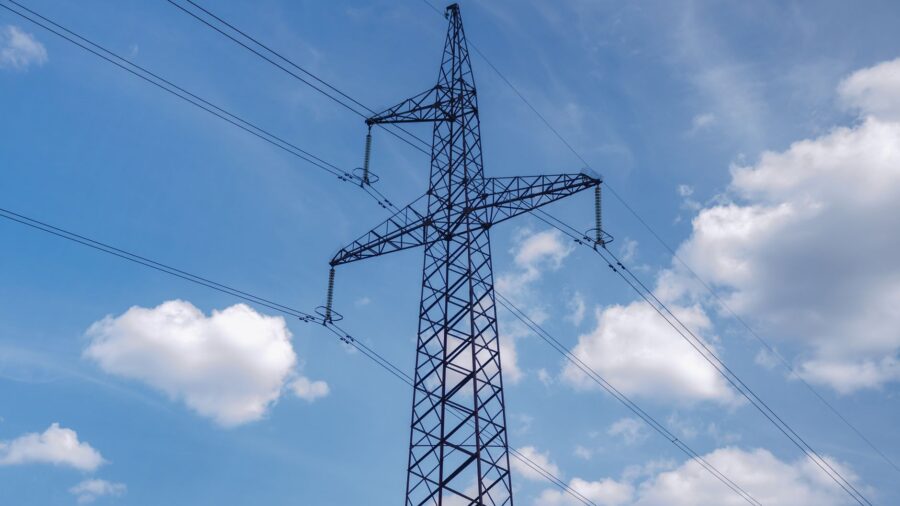
Senator Alan Armstrong believes America needs stronger electricity infrastructure to handle growing demand from data centers and other industries. His proposal focuses on streamlining the approval process for new power facilities, transmission lines, and other important energy projects. He argues that expanding electricity supply could help reduce pressure on existing systems. However, the challenge remains finding ways to build infrastructure without increasing costs for residential customers. igorgolovniov/Depositphotos
Senator Alan Armstrong proposes new rules
Oklahoma lawmakers have taken separate action to protect electricity customers from the costs of large data centers. The state’s Data Center Customer Ratepayer Protection Act of 2026 requires qualifying large electricity users to pay their fair share of the infrastructure and service costs they create. The law, effective July 1, 2026, aims to prevent those expenses from being unfairly passed on to existing customers. State Rep. Brad Boles and state Sen. Grant Green sponsored the measure, which complements the broader national debate over affordable electricity. Margarita_Young/Depositphotos
Americans are increasingly saying no
Public opposition to AI data centers has become difficult for developers to ignore. A Gallup survey conducted in March 2026 found that 71% of Americans opposed building an AI data center in their local area, with 48% strongly opposed. Concerns extend beyond technology itself. Residents worry about electricity prices, water consumption, noise, and changes to their neighborhoods, making it increasingly difficult to approve new projects in some communities. Little-known fact: In October 2024, federal energy data identified large computing facilities as a major source of electricity demand growth in Texas. Depositphotos
AI is demanding enormous electricity
Artificial intelligence requires powerful computer systems that operate inside large data centers. These facilities consume electricity to process information, store data, and keep equipment cool enough to operate safely.
As AI adoption increases, companies are building larger computing facilities across the country. Federal researchers expect electricity demand from these operations to rise considerably, creating new challenges for utilities responsible for maintaining reliable service throughout their regions. Fun fact: A June 2026 federal report projects that data centers could consume 9.5% to 15.3% of U.S. electricity by 2030, driven by rapid industry expansion. Depositphotos
Could data centers raise household bills? A June 2026 study from MIT researchers found that data center development was associated with higher electricity prices. Their analysis estimated an average increase of 2.1% in residential rates and 2.7% across all customer categories following data center entry. The findings suggest that expanding computing infrastructure can create additional costs for utilities and their customers. However, the financial impact depends in part on local electricity systems, infrastructure investment, and how regulators allocate costs among customers. Depositphotos
Some research tells another story
A June 2026 analysis from the Electric Power Research Institute reached a different conclusion. Examining electricity market data from 2015 through 2024, researchers found that data center growth had modestly reduced average residential electricity rates compared with a scenario without that growth. The findings suggest that additional electricity sales can sometimes help spread utilities’ fixed costs across more customers. However, the results describe past conditions and do not guarantee that rapidly expanding AI facilities will have the same effect in the future. Depositphotos
Spare power capacity changes the equation
Whether a new data center raises electricity costs can depend on how much unused power capacity exists nearby. Areas with sufficient generation and transmission infrastructure may accommodate additional demand without requiring major construction. However, regions already operating near their limits could need expensive upgrades. Those investments might affect residential electricity bills, depending on how regulators allocate costs between large businesses and existing customers. rafapress/Depositphotos
Special tariffs could protect consumers
Utilities are increasingly exploring special electricity rates for data centers and other large customers. These arrangements, commonly called large-load tariffs, can include minimum monthly payments, financial guarantees, and charges for dedicated infrastructure. These rates are designed to ensure that major electricity users contribute appropriately to the infrastructure they require, reducing the risk that additional costs will be passed on to households and smaller businesses. ifeelstock/Depositphotos
Oklahoma communities raise local concerns
Oklahoma has become an important part of the national debate as developers consider locations for new data centers.
Read More From This Brand:
Texas data centers are seeking more power than Oncor can currently supply
New York faces questions over discounted electricity for data centers
Texas data centers spend $340 million on rural projects to ease backlash
The post Data centers are taking the blame for rising power bills, but one GOP senator disagrees appeared first on When In Your State.
Some residents have expressed concerns about electricity demand, water supplies, noise, and the effect of large industrial facilities on surrounding communities. These questions create difficult choices for local officials. While projects may bring investment and jobs, communities want clear answers about infrastructure costs and possible long-term effects before approving construction. dbajurin/Depositphotos
Federal regulators already see the risks
Federal regulators have taken new steps to address the pressures that large data centers place on electricity systems. In December 2025, the Federal Energy Regulatory Commission directed PJM, the nation’s largest regional grid operator, to establish clearer rules for major electricity users located alongside power plants. The debate continued in October 2026, when FERC approved a PJM proposal to establish a data center registry but rejected a separate plan that would have allowed temporary disconnections during periods of grid stress. These developments highlight the challenge of supporting growing electricity demand while protecting reliability and controlling costs. Depositphotos
Faster construction brings new questions
Armstrong argues that complicated federal permitting procedures can slow projects needed to expand America’s electricity supply. His proposed changes aim to streamline approvals while maintaining rules governing infrastructure development. Supporters believe faster construction could help utilities keep pace with increasing demand. However, major energy projects still require careful planning, including environmental reviews, financing, and coordination with existing electrical systems to prevent unnecessary costs. For another data center update tied to energy demand, infrastructure costs, and federal policy, see why Michigan projects are becoming part of the broader debate over Trump’s tariffs. Depositphotos
The real question is who pays
As data center construction accelerates, electricity affordability remains a major concern for American households. Armstrong’s push for faster infrastructure development reflects one approach to meeting rising electricity demand. Meanwhile, state lawmakers and utility regulators are pursuing separate measures intended to ensure that major electricity users pay an appropriate share of the costs they create. Researchers suggest the outcome will depend on local conditions, available power supplies, and regulatory decisions. For another data center update tied to land use, rural communities, and Big Tech expansion, see why millions of dollars still haven’t convinced Indiana farmers to sell. Are data centers being blamed too quickly for rising electricity bills, or should they shoulder more of the costs? Share your thoughts and drop a comment. This slideshow was made with AI assistance and human editing. Read More From This Brand:
Texas data centers are seeking more power than Oncor can currently supply
New York faces questions over discounted electricity for data centers
Texas data centers spend $340 million on rural projects to ease backlash
The post Data centers are taking the blame for rising power bills, but one GOP senator disagrees appeared first on When In Your State.
Leave a Reply