Idaho’s Owyhee desert splits open into a 700-foot canyon with a secret waterfall: As the story develops
Shutterstock
Idaho’s Owyhee Canyonlands Wait For You
Big Jacks Creek Wilderness covers about 52,800 acres in Owyhee County, inside the high desert corridor Idaho shares with Oregon and Nevada. Sagebrush plateaus roll out overhead while canyons cut deep below them, and the Bureau of Land Management points to the area’s solitude and untamed character as its defining trait. Elevations swing from about 2,800 feet in the canyon bottoms to nearly 5,900 feet on the plateau rim, and that swing hits you the moment you leave the road behind. Shutterstock
The Creek That Earned a Wild River Label
The canyons here formed over long stretches of time as water cut into ancient volcanic rock, layer by layer. Congress locked the wilderness in as official protection in 2009, the same act that created a cluster of nearby wilderness areas across Owyhee County. Big Jacks Creek carries the federal wild river label for 35 miles of its length. From there, the creek joins Little Jacks Creek to form Jacks Creek, which keeps flowing toward C.J. Strike Reservoir. Flickr/BLMIdaho
Walls of Rhyolite Climb Nearly 700 Feet
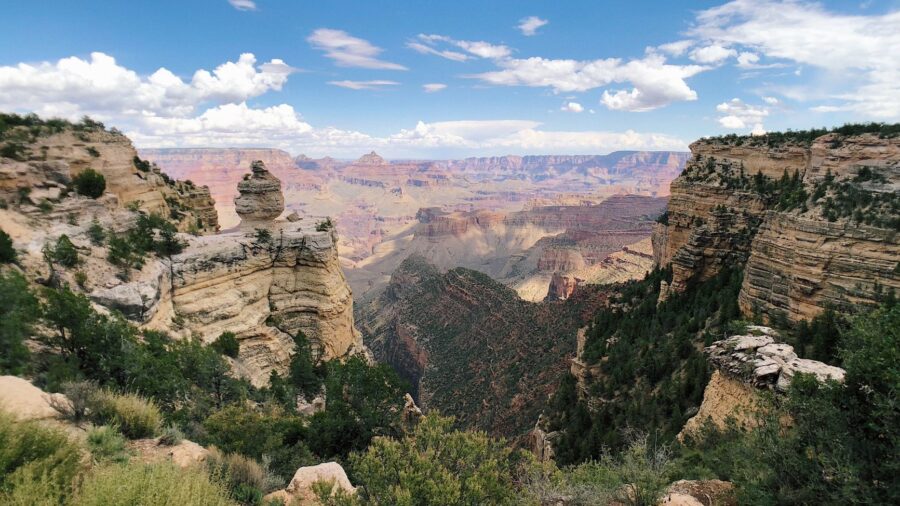
Some canyon walls climb almost 700 feet straight up, and the rock behind them is rhyolite, a volcanic stone that glows in rust and red tones under full sun. Spires and hoodoos rise out of the sagebrush like something built on purpose, and standing rock pillars punctuate the rim. Drop down into the canyon and the whole rugged basin opens below you in one sweeping view. The scale does the talking here. So does the quiet, since nothing about this place feels touched. Shutterstock
Follow the Parker Trail Down to the Creek
Most of this wilderness has no trail at all, which makes the Parker Trail worth knowing about. It runs about 2.5 miles round trip, dropping roughly 500 to 600 feet from the plateau down to the creek bottom. Rock cairns mark the switchbacks along the way, so you always know where the path bends next. The trail ends at a flat, grassy patch right beside the water, and that spot works as well as any place to catch your breath before heading back up. Shutterstock
Willows and Wild Roses Line the Creek
Willows crowd the banks where Big Jacks Creek winds through the canyon floor, and the water runs clear year round, a sharp contrast to the dry plateau above. Green growth follows the stream even in months when the rest of the high desert turns brown and dusty.
Wild roses and currant bushes fill in the gaps between the willows. Hikers who make it down to the water tend to stop here, since the shade and the sound of moving water make a natural lunch spot. Shutterstock
Push On to the Waterfall in Zeno Canyon
The main route into Zeno Canyon follows Duncan Creek, and it asks more of you than the Parker Trail does. Keen wayfinding and rough, rocky terrain come with the territory, since no maintained path leads the way. The route crosses spring-fed meadows before it drops into a side canyon, and that drop leads to a waterfall spilling over the canyon rim. Rust-colored cliffs and rock pillars tower over the falls, and the canyon bottom below stays green while the country around it stays dry. Shutterstock
Redband Trout Hold On in Desert Water
Redband trout live in these creeks, a fish built for desert water most species could not handle. Combined with the streams nearby, this stretch of country counts as one of the recognized strongholds for the species. Pockets of willow and sedge shelter the streambanks and give the fish cover from the sun. Wildlife managers watch the trout closely, since Idaho lists them as a species of special concern. Out here, running water is rare enough. Finding a trout swimming in it is rarer still. Shutterstock
Bighorn Sheep Move Through Steep Canyon Country
California bighorn sheep work their way through the steep canyon country here, sure-footed on ledges that would stop most animals cold. Pronghorn and mule deer range across the sagebrush plateaus above, and mountain lions, bobcats, and coyotes share the same ground without much company. Bats roost in the cliffs, and prairie falcons and other raptors work the sky overhead. Few places left in Idaho give wildlife this much room to roam. Flickr/BLMIdaho
No Motors No Bikes Just Open Sky
Only a handful of trails drop into the canyons, so most of this wilderness gets explored cross-country, one boot print at a time. No motors and no bicycles are allowed anywhere inside the protected land, which keeps the pace slow no matter how you move through it. The emptiness is the whole point, wide silence stretching under open sky in every direction.
Read more from this brand:
Sixty-four miles from Boise, a sand dune the size of a skyscraper glows under the night sky
The Navy is secretly testing submarines in this glacially deep Idaho lake
This Idaho waterfall is taller than Niagara, but the real show is the canyon behind it
The post Idaho’s Owyhee desert splits open into a 700-foot canyon with a secret waterfall appeared first on When In Your State.
This place rewards people who come ready to read the land itself and find their own way through it, map or no map. Wikimedia Commons/BLMIdaho
Little Jacks Creek Borders Big Jacks Wilderness
Big Jacks Creek Wilderness has a neighbor along its northwest border, Little Jacks Creek Wilderness, and the two share the same rugged canyon country. Little Jacks protects about 50,900 acres on its own, and wildlife managers count it as a stronghold for California bighorn sheep. A stretch of Little Jacks Creek carries the same federal wild river label that runs through its sister canyon. Together, the two wilderness areas form one broad, connected block of protected desert. Shutterstock
Climb North America’s Tallest Single Sand Dune
A short drive north of the wilderness puts you at Bruneau Dunes State Park, home to what Idaho’s parks agency calls the tallest single-structure sand dune in North America. The dune rises about 470 feet above the desert floor, and you can climb the soft sand yourself for wide views before riding back down on a rented sandboard. Small lakes sit at the base, which pulls in enough birds to make binoculars worth packing along with your water. Shutterstock
Stargaze at Bruneau Dunes Dark Sky Park
Bruneau Dunes carries a Dark Sky Park designation, and a public observatory on site gives you a reason to stay past sunset. Wide-open desert on every side keeps the night sky clear enough to make the wait worthwhile. From there, the Owyhee Uplands Back Country Byway, also called Mud Flat Road, threads through the wider canyonlands, linking plateaus, overlooks, and side canyons across the region. One trip through southwest Idaho covers the wilderness, the dune, and the byway, adding to a full desert road trip. Shutterstock
Visiting Big Jacks Creek Wilderness in Idaho
You reach Big Jacks Creek Wilderness in Owyhee County, about 25 miles southwest of Bruneau, Idaho, off Highway 51. From Bruneau, drive south on Highway 51 to milepost 45, then head west on unmarked Wickahoney Road for about 5 miles to the wilderness kiosk. The Bureau of Land Management’s Bruneau Field Office manages the land. Much of the surrounding backcountry calls for a high-clearance four-wheel-drive vehicle, and wet weather can leave unpaved routes impassable, so bring a map, a GPS, and plenty of water. This article was created with AI assistance and human editing. Read more from this brand:
Sixty-four miles from Boise, a sand dune the size of a skyscraper glows under the night sky
The Navy is secretly testing submarines in this glacially deep Idaho lake
This Idaho waterfall is taller than Niagara, but the real show is the canyon behind it
The post Idaho’s Owyhee desert splits open into a 700-foot canyon with a secret waterfall appeared first on When In Your State.
Leave a Reply