Montana’s Seeley Lake offers ancient forests, quiet paddling, and a thousand-year: And what happens next
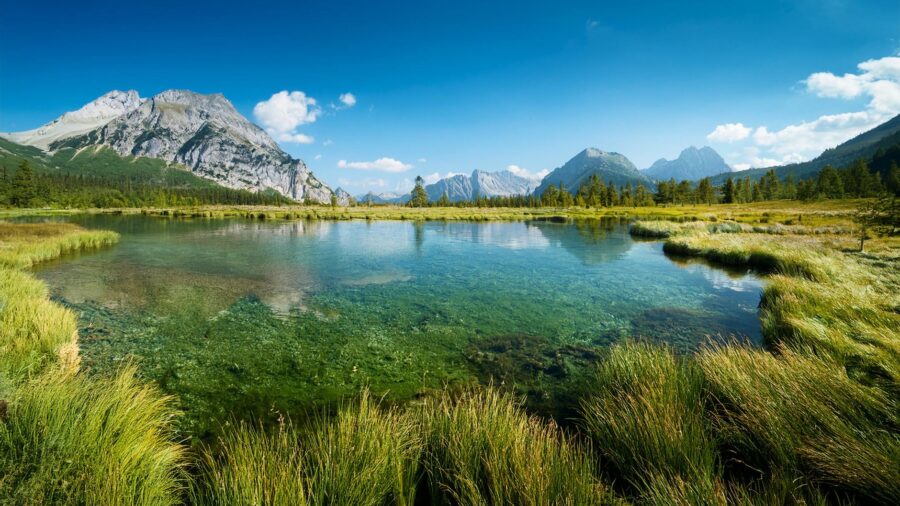
About an hour’s drive north of Missoula, a glacial lake covering more than 1,000 acres anchors a forested valley tucked between the Swan and Mission mountain ranges. Seeley Lake is one of six connected lakes threaded along the Clearwater River within Lolo National Forest, and somewhere in the surrounding woods stands a western larch that was already old when the medieval Crusades were still being fought. The valley draws far fewer visitors than Montana’s more famous destinations, but the combination of wildlife, old-growth timber, waterways, and winter trail networks gives it a range that larger parks struggle to match.
The Salish people inhabited this valley long before European settlers arrived, with the Blackfeet also passing through periodically. Jasper B. Seely put up a cabin on the lake’s shore in 1881 and became the area’s first forest ranger; a road didn’t connect the valley to the outside world until 1895. A log-style building that originally served as a horse barn on the Double Arrow Ranch in 1929 and 1930 now houses the Seeley Lake Historical Museum, where the former stalls display exhibits covering early logging, pioneer settlement, and the natural history of the region. On the water, the Clearwater Canoe Trail offers a 3.5-mile float through a willow marsh where the current is nearly undetectable, taking one to two hours at a relaxed pace. Wildlife viewing blinds along the route allow close looks at waterfowl and marsh birds. At the north end of Seeley Lake, a 30-minute loop trail returns paddlers to the starting point without requiring a second vehicle. The valley also serves as critical habitat for bald eagles, ospreys, great blue herons, moose, beaver, white-tailed deer, and what Montana officials describe as the largest breeding population of common loons in the western continental United States. Grizzly and black bears move through the surrounding mountains, and hikers are advised to carry bear spray. In winter, more than 350 miles of groomed snowmobile trails fan out from the valley alongside roughly 26 kilometers of Nordic ski trails managed under the Seeley Creek system.
The tree stands more than 150 feet tall, which clears the Statue of Liberty. Its trunk runs about 22 feet around, and it takes several people linking hands to circle it.
The centerpiece of the old-growth forest is a western larch named Gus, designated the largest of its species in the United States by the National Register of Champion Trees in 2020. Estimated at around 1,000 years old, the tree’s bark was already centuries thick before Columbus crossed the Atlantic. A wooden platform at its base allows visitors to walk directly up to the trunk. Gus anchors the 60-acre Jim Girard Memorial Grove, dedicated in 1953 to honor a Forest Service timber specialist who studied trees of this type throughout his career. Many of the surrounding larches are 600 years old or more, and a flat, mile-long trail loops through the grove along the lake’s western shore. Western larch is one of roughly 20 deciduous conifers on earth, shedding its needles each autumn after they turn a vivid gold. Every October, the hillsides around Seeley Lake shift to yellow against the darker evergreen backdrop, making the grove one of the premier fall-color destinations in western Montana. For visitors seeking more elevation, the Morrell Falls Trail covers five miles round-trip through mixed forest before arriving at a 90-foot double waterfall on Morrell Creek, with a steep spur trail offering a viewpoint above the cascade. Seeley Lake lies along Montana Highway 83, approximately 50 to 60 miles north of Missoula. Campsite reservations are available through the federal recreation system, and the Clearwater Canoe Trail put-in sits about four miles north of town off Highway 83. Gus and the Girard Grove are reached via Boy Scout Road on the lake’s west side.
Leave a Reply