North America’s tallest waterfall drops 2,425 feet in California’s Yosemite Valley: As the story develops
Shutterstock
It’s three falls, one giant drop
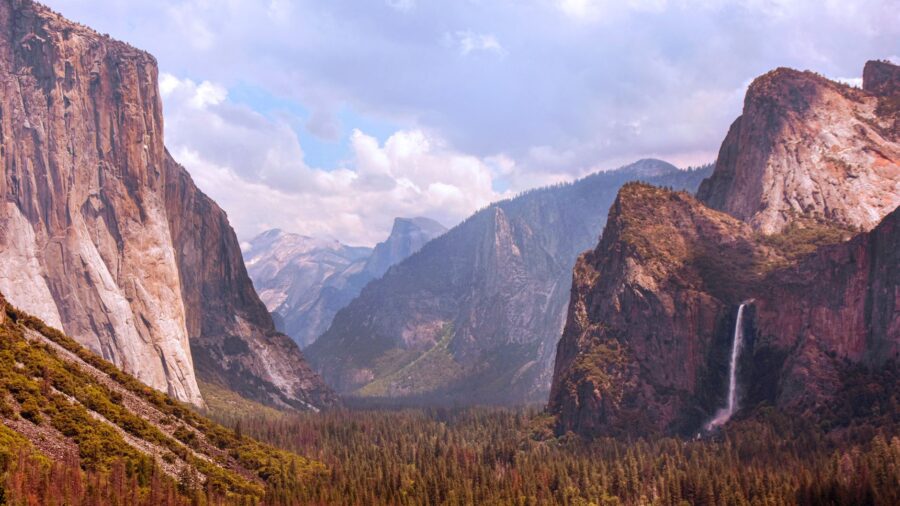
Yosemite Falls plunges 2,425 feet down the granite face of Yosemite Valley, making it the tallest waterfall in North America. You can see the white water from nearly anywhere on the valley floor, a ribbon of falling water so high it almost looks painted on the cliff. Whether you walk a flat paved loop to the base or grind your way to the rim, the falls reward you at every level. Spring is when the whole thing roars. Shutterstock
The Ahwahneechee called it Cholock
Long before Yosemite became a national park, the Ahwahneechee people lived in the valley with their main village sitting near the base of the falls. They called it Cholock. In 1869, naturalist John Muir built a small cabin nearby while working at a sawmill, one of the first in a long line of people drawn to this particular corner of the valley. The trail to the top was built between 1873 and 1877, making it one of the oldest in the park. Wikimedia Commons/chensiyuan
Three drops stacked on top of each other
What looks like one waterfall is actually three sections working together. Upper Yosemite Fall makes the biggest plunge at 1,430 feet, which is more than half the total drop on its own. Below it, the Middle Cascades tumble another 675 feet through a narrow gorge. Then Lower Yosemite Fall closes it out with a 320-foot drop to the valley floor. Each section is a significant waterfall by itself. Put them together and nothing on the continent comes close. Shutterstock
Walk to the base without breaking a sweat
The Lower Yosemite Fall loop is short, paved and easy enough for almost anyone. The eastern section of the loop is accessible by wheelchair and stroller, and benches sit along the way so you can stop, look around and let the view settle in. Exhibits along the path cover both the natural history and the cultural story of the area. The trail crosses branches of Yosemite Creek as it leads you toward the base, and the sound of water starts building long before the falls come into view. Shutterstock
Stand on the footbridge and feel the full force
The paved loop brings you to a footbridge at the base of Lower Yosemite Fall, and in spring or early summer, the water comes down with enough force to spray you from where you’re standing. You don’t just see the falls from here, you hear them all around you. The mist hits your face before you reach the bridge. Some people come in rain jackets.
Others just accept the fact that they’re going to get wet. Either way, this is one of the closest you can get to a waterfall of this size anywhere in the park. Wikimedia Commons/Diliff
The climb to the top is not casual
The Yosemite Falls Trail runs 7.2 miles round trip with 2,700 feet of elevation gain, and most people need six to eight hours to finish it. The trail starts near Camp 4 and climbs through oak woodland right away with no warm-up. Steep drops sit close to the path in several spots, so you stay on the marked trail. This is a strenuous hike, not a nature walk. Bring water, start early, and give yourself more time than you think you need. Shutterstock
Columbia Rock is worth the stop
If the full climb sounds like too much, Columbia Rock gives you a solid turnaround point about two miles in with 1,000 feet of gain. From the overlook, you get a wide-open view of Half Dome and Sentinel Rock spread across the valley below. Push another half mile past Columbia Rock and you reach a head-on view of the Upper Fall that most people don’t see. That extra stretch, which is about 30 minutes each way, is worth it. Shutterstock
The valley opens up from the upper switchbacks
The switchbacks near the top are steep and rocky, but the views start repaying the effort long before you reach the rim. Yosemite Valley’s meadows spread out below you, and you can trace the Merced River as it bends across the valley floor. Half Dome rises behind the Upper Fall, and when you reach the small viewing platform at the top, you’re standing right where Yosemite Creek pours over the edge of the cliff. The water rushes past your feet and then disappears into 1,430 feet of open air. Shutterstock
Come in April and May for the real show
The falls run on snowmelt, and the winter snowpack from the high country feeds Yosemite Creek all the way down to the valley. April and May bring the strongest flow and the loudest roar. By late summer, the water shrinks to a thin thread, and in dry years it can disappear entirely before autumn rains start things moving again. If you want the falls at full power, plan around the snowmelt. Timing matters more here than it does at almost any other waterfall in the park. Shutterstock
A full moon can paint an arch through the mist
On spring nights when the water is running high, a full moon at the right angle will refract through the mist at the base of the falls and form a moonbow, a glowing arch of light in the spray. Photographers show up for it.
Yosemite’s real show happens 10,000 feet up on Tioga Road
This California trail ends with a 40-foot drop onto Wildcat Beach
Glacier Point puts all of Yosemite in one look, and you don’t even need hiking boots
The post North America’s tallest waterfall drops 2,425 feet in California’s Yosemite Valley appeared first on When In Your State.
Getting one depends on three things lining up at once: strong water flow, clear skies and the moon at the right position. It doesn’t happen every month, and it doesn’t last long, but when it does appear, it’s the kind of thing people drive hours to see. Wikimedia Commons/Kevin
Winter builds a cone of ice at the base
When temperatures drop in winter, the mist and spray at the base of Upper Yosemite Fall freeze into a growing cone of ice that can rise more than 300 feet. It usually starts forming in December and holds its shape until mid-April when warmer temperatures break it down. In the coldest weeks, frazil ice, a delicate crystalline form, can appear when the mist freezes in mid-air. The falls look completely different in winter. The ice changes the whole scale of the place. Shutterstock
No hike required for a great view
You don’t need to set foot on a trail to see Yosemite Falls. The white water is visible from across the valley, and Cook’s Meadow gives you a clear, open sightline with Half Dome sitting behind the falls and Sentinel Rock off to the side. The meadow is flat and easy to walk. Most people stop there long enough to take it in, and then realize they’ve been standing still for 20 minutes. That’s the thing about a 2,425-foot waterfall. It holds your attention. Shutterstock
Visit Yosemite Falls in Yosemite National Park, California
The Lower Yosemite Fall loop starts off Northside Drive near Yosemite Valley Lodge, and the trailhead for the full climb begins near Camp 4. The loop is free once you’re inside the park, but Yosemite charges an entrance fee, currently $35 per vehicle. Plan a visit between April and June for peak flow. The lower loop takes about 30 minutes. The full hike to the top takes most people six to eight hours. Check the official website for current road and trail conditions before you go. This article was created with AI assistance and human editing. Read more from this brand:
Forget the valley. Yosemite’s real show happens 10,000 feet up on Tioga Road
This California trail ends with a 40-foot drop onto Wildcat Beach
Glacier Point puts all of Yosemite in one look, and you don’t even need hiking boots
The post North America’s tallest waterfall drops 2,425 feet in California’s Yosemite Valley appeared first on When In Your State.
Leave a Reply