Wild Bill Hickok’s legend took shape at this quiet Nebraska Pony Express stop: Authorities confirm
Wikimedia Commons/Ammodramus
A quiet park with a violent past
Rock Creek Station sits on 350 quiet acres near Fairbury, and for most of its history nobody outside Nebraska gave it a second thought. Wagons rolled through on the Oregon Trail, stagecoaches stopped to change horses, and Pony Express riders thundered past without slowing. You can walk the same ground today, past reconstructed cabins and ruts still carved into the earth. Then there is the summer day in 1861 that turned a payment dispute into something the whole country still talks about. Wikimedia Commons/Ammodramus
Rolling prairie with an Old West past
Rock Creek Station covers about 350 acres in southeastern Nebraska, near the town of Fairbury. Grassy hilltops roll into wooded creek bottoms, and ravines cut through land you would expect to be flat. Wagons once rattled through on their way west, stagecoaches changed horses here, and Pony Express riders pounded past at a gallop. You can walk that same ground today at what is now a state historical park, where frontier history and open prairie sky pull in visitors from well beyond Nebraska. Wikimedia Commons/Ammodramus
The toll bridge that led to a killing
The station started in 1857 along the Oregon and California trails, selling supplies to families heading west by wagon. Two road ranches sat across Rock Creek from each other, joined by a toll bridge. In 1860 and 1861, the east side worked as a Pony Express station, with riders swapping horses and pushing on. Then in July 1861, an argument over payment turned deadly, an event tied to frontiersman James Butler Wild Bill Hickok. Without that day, the station might have faded from memory. Wikimedia Commons/Ammodramus
Buildings rebuilt board by board
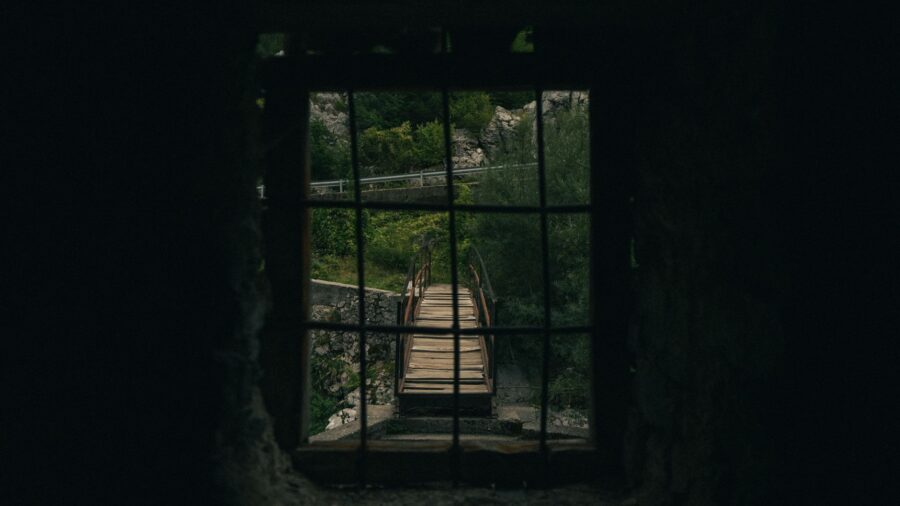
Archaeologists dug up the original building sites in 1980 and 1981, and what they pulled from the ground helped workers rebuild the ranch structures true to the evidence. You can walk through reconstructed cabins, a bunkhouse, a barn, and a post office, each built on the footprint where the originals stood. A rebuilt toll bridge crosses Rock Creek the way the old one did, showing how travelers got their wagons across. The grounds stay open all year, though the buildings open seasonally. Shutterstock
Wagon ruts still cut into the ground
Northwest of the station, you can still see ruts carved by thousands of covered wagons rolling over the same ground year after year. The stretch runs about 1,600 feet, deep enough that the National Park Service calls it the finest pristine trail ruts in southeastern Nebraska. Standing beside them, you get a sense of how many wagons rolled through this narrow strip of prairie.
Few spots put you this close to the real Oregon Trail, worn into the earth by wheels instead of words. Shutterstock
Tools and relics inside the visitor center
Inside the visitor center, display cases hold tools, wagon parts, and other items archaeologists pulled straight out of the ground here. A brick relief sculpture shows a Pony Express rider racing across open plains, frozen mid-gallop on the wall. Exhibits piece together more than a century of trail travel, from the first wagons through the station’s Pony Express years. You can also pick up maps here for a self-guided walking tour, so you know exactly where to find each historic spot once you’re outside again. Shutterstock
Six miles of trails through history
Six miles of hiking and nature trails wind through the park, cutting past the reconstructed buildings and right alongside the old wagon ruts. The paths cross open prairie, dip through shady creek bottoms, and climb through quiet ravines before leveling back out. Self-guided tour maps from the visitor center help you find each historic stop along the way, so you never have to guess where you are. The walking stays gentle the whole way, which makes it an easy trip for hikers of any age. Wikimedia Commons/Ammodramus
Golden grass and timber-lined creek bottoms
The park protects a slice of southeastern Nebraska prairie that still looks close to how it did in wagon days. Golden grasses sway across the rolling hilltops through summer and into fall. Below the hills, Rock Creek winds through bottoms thick with timber, and rugged ravines break up the open views in unexpected places. Photographers who find this park tend to come back more than once, camera in hand, chasing the same light from a new angle. Wikimedia Commons/MauraWen
Cover the trails the way pioneers did
Six miles of equestrian trails wind through the park and into the recreation area next door, following the same rolling prairie routes hikers use on foot. Riding those trails on horseback gives you a way to cover this land the way people crossing it once actually experienced it. An equestrian campground sits right at the adjoining recreation area, set up for riders who want to stay overnight. You will find water, corrals, and picnic tables there, built with horses and their riders in mind. Shutterstock
See more ground on two wheels
Bikes are welcome on the park’s multi-use trails, and riding lets you roll past historic sites and open prairie views without stopping every few hundred feet. The terrain stays gentle enough for casual cyclists and families with younger kids in tow. On two wheels, you can cover more ground in a single visit, linking the historical park with the neighboring recreation area in one loop.
Read more from this brand:
Brownville, Nebraska has 140 residents, a river view, and more past than it knows what to do with
The bluffs that guided a million pioneers across Nebraska still stand, and entry is free
Every pioneer diary mentions this Nebraska rock and you can finally walk up to it
The post Wild Bill Hickok’s legend took shape at this quiet Nebraska Pony Express stop appeared first on When In Your State.
It is an easy way to see more of Rock Creek Station without spending the whole day walking. Shutterstock
Blacksmiths and pioneers come to life
Area re-enactors put on living history demonstrations here through the summer months, and costumed volunteers show visitors how pioneers actually lived and worked day to day. Watching them move through the reconstructed buildings brings the whole site to life in a way exhibits alone cannot. Inside the rebuilt Pony Express barn, a working forge and blacksmith tools sit ready for demonstrations, hammers and all. For families, it gives kids a hands-on way to picture what daily life on the trail really looked like. Wikimedia Commons/Ammodramus
Trail Days brings June to life
Every year, Rock Creek Trail Days fills the park on the first full weekend in June with pioneer-era sights and activities you will not find on a normal visit. The National Pony Express Re-Ride also passes through that same month, with riders carrying mail by horseback just as couriers once did along this route. Between the two events, June turns into the busiest, liveliest stretch of the year at Rock Creek Station, and the best month to plan around. Shutterstock
Picnic tables under the prairie sky
When you are ready for a break, the park has close to 40 picnic tables and grills, plus three covered shelters for shade. Grassy spots under the trees make an easy lunch stop after a morning on the trails or beside the wagon ruts. It is a fine place to slow down between exploring the historic buildings and walking the prairie paths. The shelters and grounds can even be rented out for reunions or other gatherings, keeping the park busy past a single afternoon. Wikimedia Commons/NPS
Visit Rock Creek Station in Fairbury, Nebraska
You can walk the grounds of Rock Creek Station State Historical Park at 57426 710th Rd. in Fairbury from 8 a.m. to sunset year-round with a park entry permit. The visitor center runs daily or weekend hours from mid-April through mid-October, then switches to appointment-only. Admission costs $5 for adults, $1 for kids 3 to 12, and nothing for children 2 and under. If you want to stay longer, the recreation area next door has electric, basic, and equestrian campsites ready for you. This article was created with AI assistance and human editing. Read more from this brand:
Brownville, Nebraska has 140 residents, a river view, and more past than it knows what to do with
The bluffs that guided a million pioneers across Nebraska still stand, and entry is free
Every pioneer diary mentions this Nebraska rock and you can finally walk up to it
The post Wild Bill Hickok’s legend took shape at this quiet Nebraska Pony Express stop appeared first on When In Your State.
Leave a Reply