Wyoming’s trail disappears after 3 miles, then this turquoise lake stops you cold: Here’s what to know
Shutterstock
A Lake Most Hikers Never Reach
Grand Teton National Park holds dozens of alpine lakes, but one draws hikers who don’t mind extra work to reach it. The trail leading to it stops being an official trail about three miles in, and the park stops marking the way from there. You cross a boulder field with the tallest peak in the range rising straight ahead. What waits on the other side has a color that stops people mid-step, and it isn’t there by accident. Shutterstock
Milky Blue Water Below Grand Teton
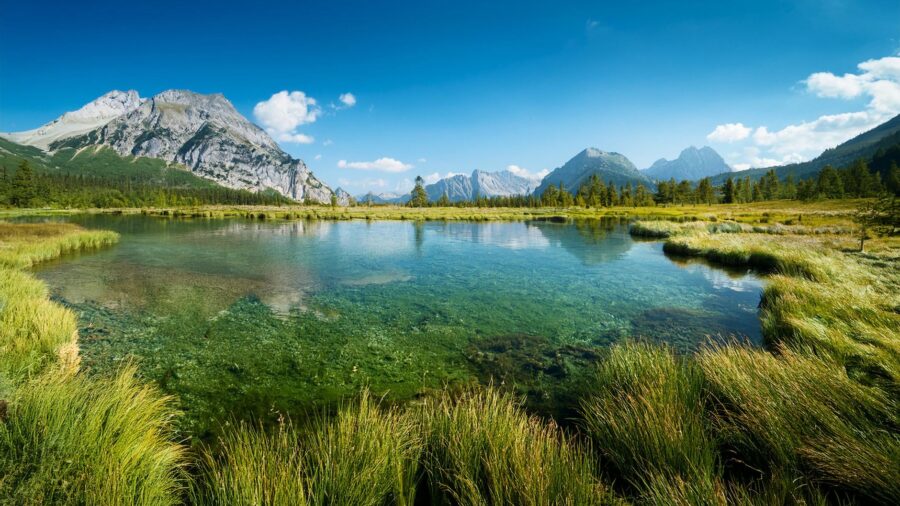
Delta Lake sits high in the mountains of Grand Teton National Park, tucked into the northwest corner of Wyoming. Its water runs a milky blue-green, and most hikers stop walking the moment they see it. The lake rests right at the foot of the Grand Teton, the tallest peak in the entire range. That combination has turned Delta Lake into one of the park’s most sought-after hikes. On calm mornings, the peak reflects across the still surface of the water. Shutterstock
How Ice Turns This Lake Turquoise
The Teton Glacier carved this basin and slowly pulled back over thousands of years, leaving Delta Lake behind. As the ice moved, it ground the bedrock beneath it into a fine dust known as rock flour, or glacial silt. That silt washes into the lake and stays suspended in the water instead of sinking to the bottom. Sunlight bounces off those tiny particles, and that’s what gives the lake its turquoise glow. The color peaks when glacial melt runs heaviest, in mid to late summer. Shutterstock
13,775 Feet of Rock Right Behind You
The Grand Teton rises 13,775 feet, straight up from the far side of the lake. Its cliffs run steep and jagged, cutting one of the boldest backdrops found anywhere in the park. Snow holds onto the high rock well into summer, long after the valley floor has gone dry. From the shoreline, that wall of stone feels close enough to reach out and touch. Few alpine lakes anywhere in the country put you this close to a mountain this size. Shutterstock
Starting Out at Lupine Meadows Trailhead
Most hikers start this climb at the Lupine Meadows Trailhead, where a large parking lot comes with pit toilets and trash cans. That lot fills up early, since several of the park’s most popular hikes share the same starting point. The first stretch of trail stays flat and easy, which gives your legs a break before the real climbing begins. Get there early and you’ll trade crowded trails for quiet ones, plus better color on the lake once you arrive.
Shutterstock
2,300 Feet of Switchbacks Up the Mountain
After the flat opening stretch, the trail turns into a long series of steep switchbacks climbing the mountainside. By the top of this section, you’ve gained roughly 2,300 feet. Turn around partway up and you’ll see Bradley Lake and Taggart Lake spread out in the valley below. This stretch follows the same official trail that leads toward Surprise and Amphitheater Lakes, so you’re sharing it with hikers headed to all three. Steady effort here earns wide, sweeping views. Shutterstock
Where the Official Trail Just Stops
About three miles in, the route to Delta Lake splits off from the official trail. The park doesn’t mark, map, or maintain anything past this point. Rangers call it a backcountry trail, or sometimes a social trail, since it exists only because hikers have worn it into the ground over time. From here, you follow the packed dirt and the hikers ahead of you instead of any sign. The turnoff itself is easy to walk right past, so keep your eyes open for it. Shutterstock
Scrambling Across the Boulder Field
The last push to Delta Lake climbs straight over a field of tumbled boulders. Loose dirt and steep, slippery ground make every step there worth watching. In places, you’ll scramble hand over foot just to keep climbing toward the top. This stretch suits hikers with some experience under their boots, not a first outing on the trail. Then you crest the last boulder, and the lake appears all at once, spread out below the peak. Shutterstock
The Lake and the Peak Together
At the top of the boulder field, the turquoise water and the Grand Teton come into view together, and people who’ve hiked the whole park call this one of the finest scenes in it. Show up on a calm morning and the peak mirrors itself across the surface almost perfectly. The shoreline gives you plenty of room to sit, catch your breath, and take it in before heading back down. Round trip, the whole hike runs about 7.5 miles. Wikimedia Commons/National Park Service
Inside the Basin Called Glacier Gulch
Delta Lake sits inside a rugged basin called Glacier Gulch, boxed in by steep cliffs and jagged ridges on nearly every side. Ice and rock shaped this entire pocket of the mountains over a very long time. Below the lake, an intermittent waterfall is said to drop from the slopes above. Even with the crowds Delta Lake draws, the basin itself still feels remote and wild once you’re standing in it.
Read more from this brand:
Why Jenny Lake is the one stop in Grand Teton National Park you can’t skip
Schwabacher Landing turns Grand Teton into two mountain ranges for the price of one
This Wyoming basin packs a dozen 12,000-foot peaks into one granite bowl
The post Wyoming’s trail disappears after 3 miles, then this turquoise lake stops you cold appeared first on When In Your State.
Shutterstock
Adding Surprise and Amphitheater Lakes
If Delta Lake isn’t enough, strong hikers can keep climbing to add Surprise Lake and Amphitheater Lake to the same day. Both sit higher up the mountain, along the trail the park actually maintains. Tack them on and the whole outing stretches to around 11.5 miles round trip. Each lake brings its own alpine scenery and its own stretch of quiet water. Together, the three lakes add up to one of the biggest single-day payoffs anywhere in the Tetons. Shutterstock
Bear Country From the Valley Up
The Tetons count as grizzly and black bear country from the valley floor all the way to the peaks. Rangers recommend carrying bear spray anywhere in the park, and this trail is no exception. Hikers have spotted both bears and mule deer along the lower sections. Making some noise as you walk and staying alert keeps you and the animals around you safer. Watching wildlife from a distance, rather than up close, ends up being part of the whole mountain experience. Shutterstock
Why Delta Lake Is Worth the Climb
Delta Lake pays off the climb with a view that ranks among the best in the entire park. The turquoise water, the Grand Teton rising overhead, and the wild basin around it all come together in one place. Because the approach takes real effort, the crowds here stay thinner than what you’ll find at roadside overlooks. Sunrise remains the best time to stand at the water’s edge. Few hikes in Wyoming pack this much scenery into a single day. Shutterstock
Plan Your Hike to Delta Lake, Wyoming
You reach Delta Lake from the Lupine Meadows Trailhead, off Teton Park Road near Moose, Wyoming. The park charges $35 per vehicle, plus a $100 per-person fee for non-U.S. residents age 16 and up starting in 2026. Pets can’t come with you on this trail. The trailhead has pit toilets but no water past that point, so pack what you need. The route usually clears of snow from July through mid-September, and the last stretch stays unmarked, so bring bear spray. This article was created with AI assistance and human editing. Read more from this brand:
Why Jenny Lake is the one stop in Grand Teton National Park you can’t skip
Schwabacher Landing turns Grand Teton into two mountain ranges for the price of one
This Wyoming basin packs a dozen 12,000-foot peaks into one granite bowl
The post Wyoming’s trail disappears after 3 miles, then this turquoise lake stops you cold appeared first on When In Your State.
Leave a Reply