Halfway between LA and San Francisco, this pine town moves at its own speed: As the story develops
Shutterstock
It’s halfway between SF and LA
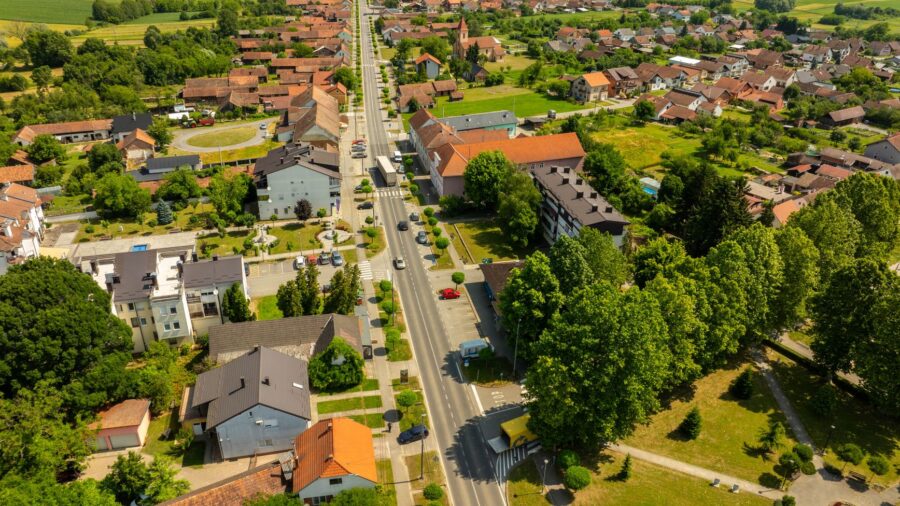
Cambria sits on California’s Central Coast along Highway 1, tucked into hills where Monterey pines meet the Pacific. The town splits into two walkable downtown stretches, the East Village and the West Village, and the whole place covers just a few square miles of rocky bluffs, sandy coves, and shaded woodland. Most people who come here end up wandering on foot between the beach, the trees, and the shops. The slow pace is the whole point, and once you settle in, you’ll understand why nobody’s in a hurry. Wikimedia Commons/Peter D. Tillman
The town went by Slabtown before it got its real name
Northern Chumash and Salinan people lived along this coast for thousands of years before Europeans showed up. The land eventually became part of a Mexican-era ranch grant in the 1800s, and the settlement that grew here cycled through a string of names, including Slabtown, Rosaville, and Santa Rosa. None of them stuck. In January 1870, the town officially became Cambria, an old Latin name for Wales. Ranching, dairy, and small farms built the early community long before tourists ever found it. Shutterstock
A mile-long boardwalk runs right above the surf
A wooden boardwalk stretches about a mile along the bluffs above Moonstone Beach, connecting the town’s north end with Leffingwell Landing. The path stays mostly flat and works for wheelchairs, with benches and viewing decks spaced along the way. Staircases drop you down to the sand at several points if you want to get closer to the water. Dogs on leash are welcome, and cypress and pine trees line parts of the walk. You can cover the whole thing in 30 minutes or stretch it to an hour. Shutterstock
Smooth milky stones roll in with the surf
The beach got its name from the smooth, milky stones that wash up in the waves. You’ll also find bits of jasper and other polished pebbles mixed in along the shoreline. The trick is to look in the wet sand near the waterline, where the stones catch the light. Footing shifts as you walk because the beach mixes sand and rock in patches. Early settlers named this stretch for the moonstones long before anyone came here on vacation. Shutterstock
Sea urchins and hermit crabs fill the tide pools
Low tide opens up rocky pools at Leffingwell Landing and the north end of Moonstone Beach. You can scramble a short way down from the boardwalk to reach the water’s edge, where the pools hold sea anemones, purple sea urchins, snails, hermit crabs, and barnacles.
The best viewing comes on low-tide days, when the shallow water lets you see straight to the bottom. Local guidance asks you to look but leave the creatures where you find them. Shutterstock
430 acres of open bluffs sit right in the middle of town
Fiscalini Ranch Preserve protects about 430 acres of coast, grassland, and forest without ever leaving Cambria’s borders. The Bluff Trail traces the edge of the ocean cliffs, while inland loops wind through Monterey pines. Residents and conservation groups bought the land around 2000 to keep developers from building on it. Many trails are gentle and partly boardwalked, with handmade driftwood benches along the route. From the bluff-top paths, you can spot otters, seals, and sometimes passing whales. Shutterstock
One of California’s last native Monterey pine forests
Cambria wraps around a native Monterey pine forest, one of only a few such stands left in California. The trees give the hills their green, shaded character all year and grow right up to the edge of neighborhoods and trails. Fiscalini Ranch protects one of the larger groves within town. Drought and disease have stressed the pines over the years, which makes the surviving stands something people here take seriously. You walk under a canopy that has fewer and fewer counterparts along the coast. Shutterstock
Monarch butterflies cluster high in the pines each winter
From roughly October through February, western monarch butterflies overwinter along this stretch of coast. Fiscalini Ranch Preserve is one of the few sites where monarchs still roost on native trees rather than eucalyptus. The butterflies gather in clusters high in the pines, drawing visitors and researchers who come to count them. Conservation groups work with the local community to rebuild the population here. Cambria sits on the region’s Western Monarch route, a marked stop for a species that needs every foothold it can get. Shutterstock
Sea otters float in the kelp just offshore
Southern sea otters drift in the kelp beds off Cambria, and you can watch them from the Moonstone Beach boardwalk or Leffingwell Landing without binoculars on a good day. Harbor seals and dolphins show up close to shore through much of the year. Gray whales pass during their migration, and humpbacks appear offshore in season. Where Santa Rosa Creek meets the beach, shorebirds gather along the wet sand. The wildlife here doesn’t hide.
Read more from this brand:
Tourism is overwhelming one California town but losing visitors could hurt even more
This tiny California beach town gets more sun than almost anywhere else on the Central Coast
Rock arches, sea caves and tide pools?
You just have to stand still and look. Shutterstock
Two tiny villages with galleries and 19th-century buildings
Downtown Cambria splits into two small districts you can cover in one easy walking loop. Main Street is lined with galleries, antique shops, and family-run stores, and some of the buildings date back to the town’s 19th-century beginnings. The Cambria Historical Museum sits in the East Village if you want to dig into the local story. Nothing here feels rushed or oversized. The whole downtown runs compact enough that you’ll pass the same corners twice and notice something new each time. Wikimedia Commons/Peter D. Tillman
A folk-art castle built from tin cans and abalone shells
On a hillside above town sits Nitt Witt Ridge, a home that local resident Art Beal spent about 50 years building by hand. Starting in 1928, Beal shaped the terraces with a pick and shovel, using salvaged cans, abalone shells, tile, car parts, and whatever else people threw away. The site is now a California Historical Landmark, sometimes called the “anti-Hearst Castle.” It makes a quirky counterpoint to the grand estate up the coast, built from scraps instead of millions. Wikimedia Commons/Rhododendrites
Olallieberry pie put this town on the food map
Cambria runs on the olallieberry, a blackberry-raspberry hybrid grown on the Central Coast. Linn’s Restaurant, open in the East Village since 1989, started as a family fruit farm and turned the berry’s pie into a local signature. Over on Moonstone Beach, the Sea Chest Oyster Bar has served seafood out of a Nantucket-style building since 1975. Both places grew deep roots over decades and still draw regulars. Farm stands and a local farmers market fill in the rest with fresh produce from the surrounding area. Shutterstock
Check out the old California beach town of Cayucos
If you want to stretch your trip, head about 15 miles south on Highway 1 to Cayucos. This small beach town sits between Cambria and Morro Bay, with a historic pier that reaches into the Pacific and gives you a wide-open view of the coast. Six miles of state beach run south from town toward Morro Rock, with plenty of room for walking and tide pooling. The compact downtown along Ocean Avenue keeps an old California feel, and leashed dogs are welcome on much of the sand. This article was created with AI assistance and human editing. Read more from this brand:
Tourism is overwhelming one California town but losing visitors could hurt even more
This tiny California beach town gets more sun than almost anywhere else on the Central Coast
Rock arches, sea caves and tide pools? This California park never charges a dime
The post Halfway between LA and San Francisco, this pine town moves at its own speed appeared first on When In Your State.
Leave a Reply